Inpage Navigation Section: Overview
2024
Z e-1
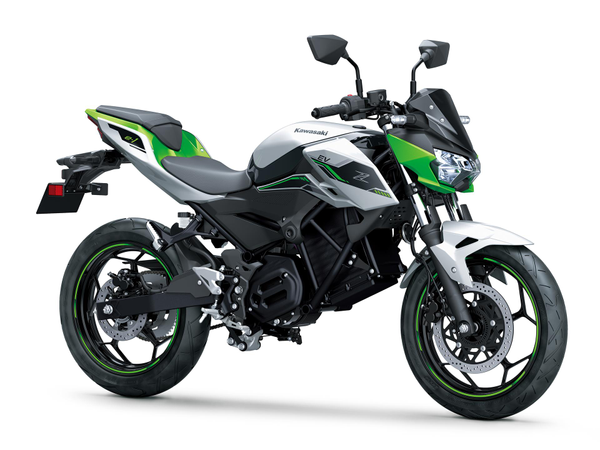
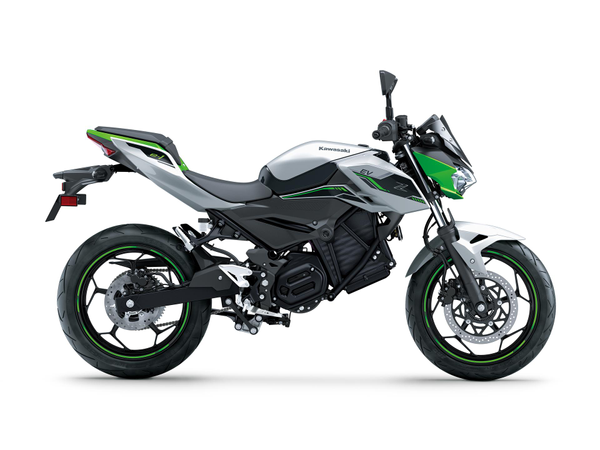
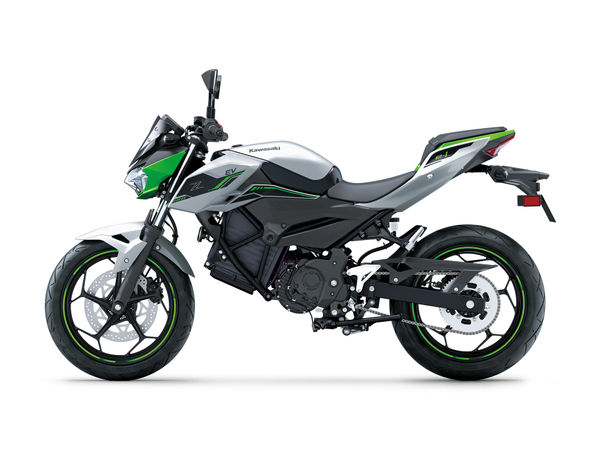
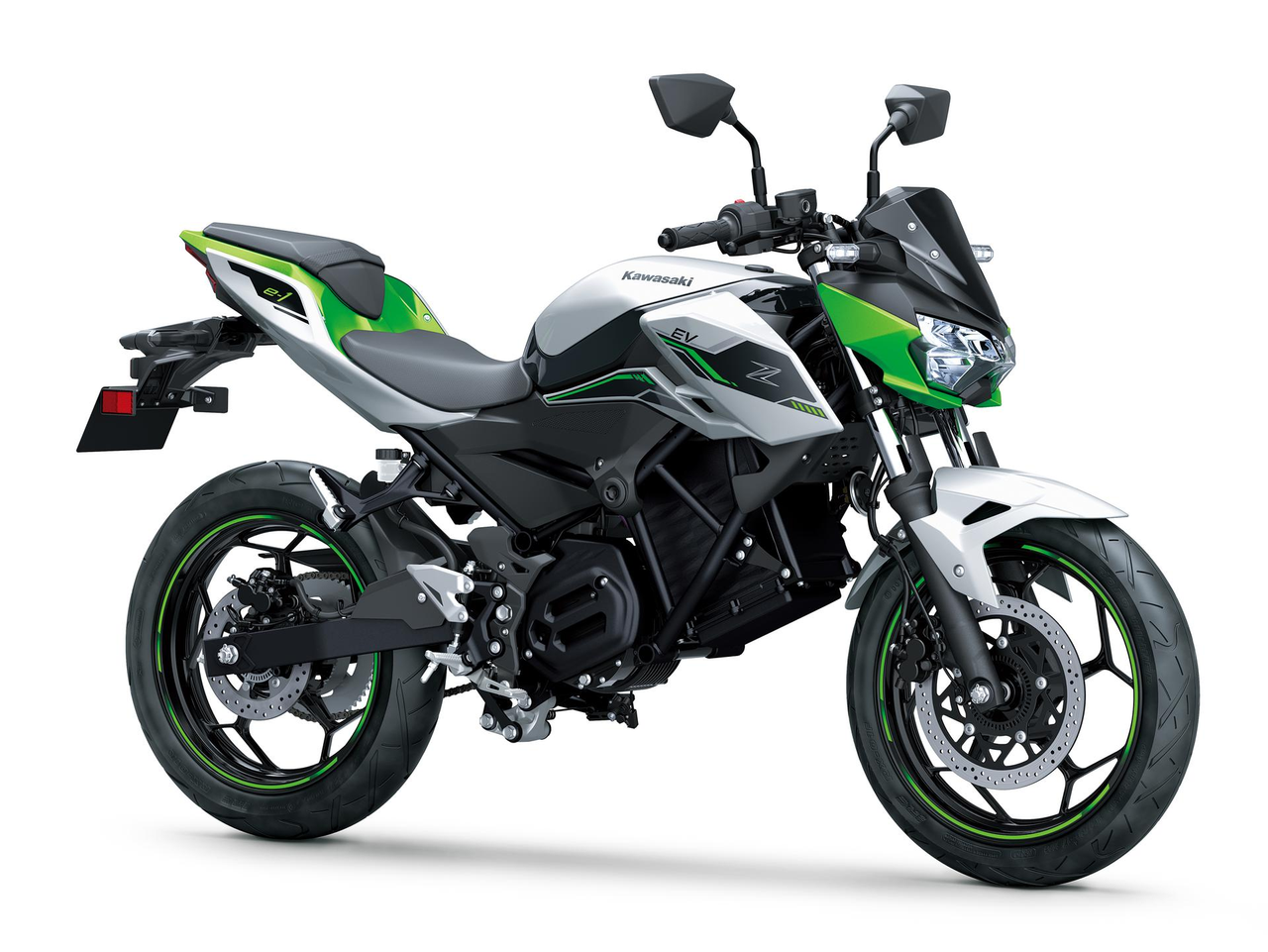
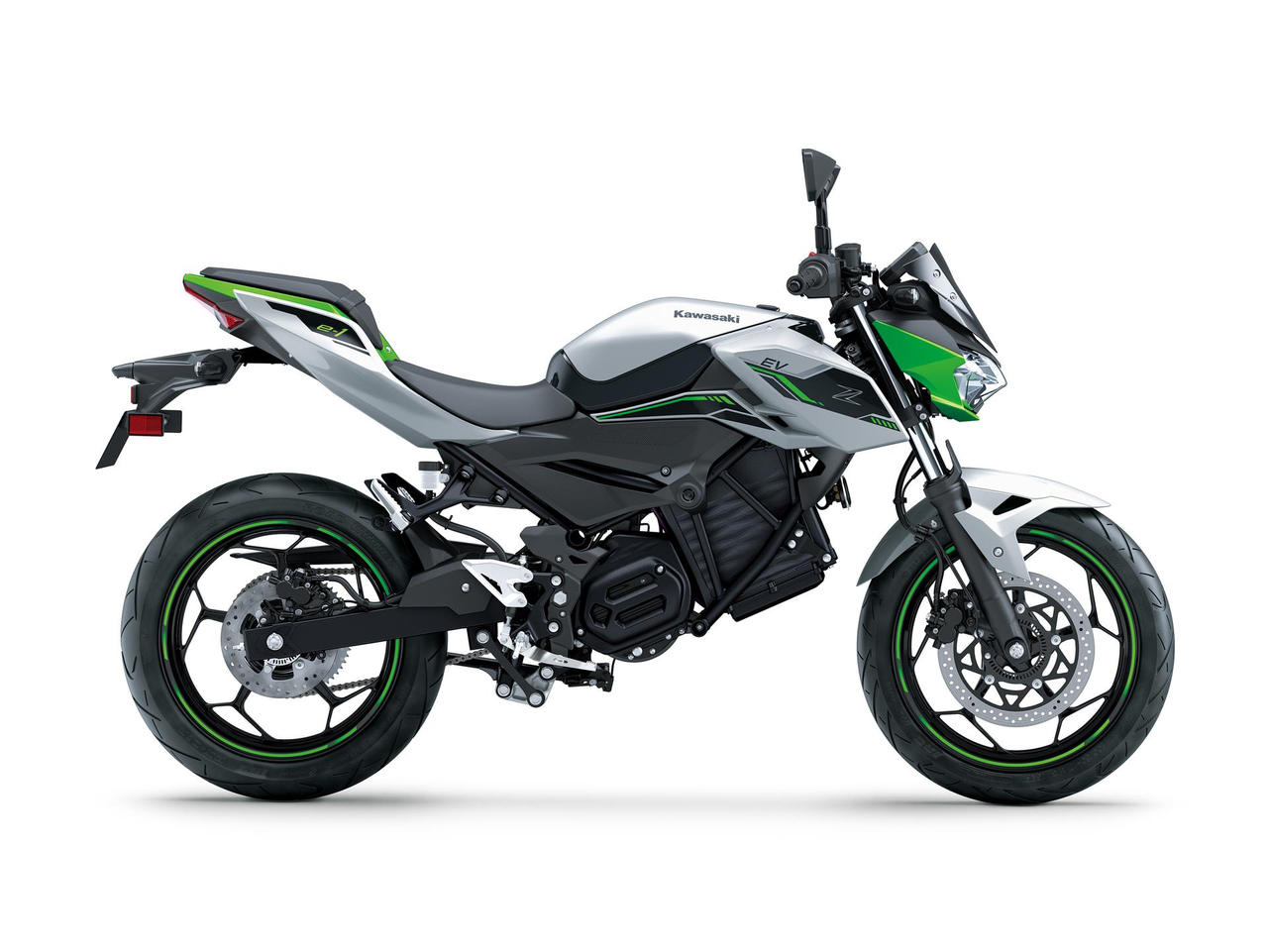
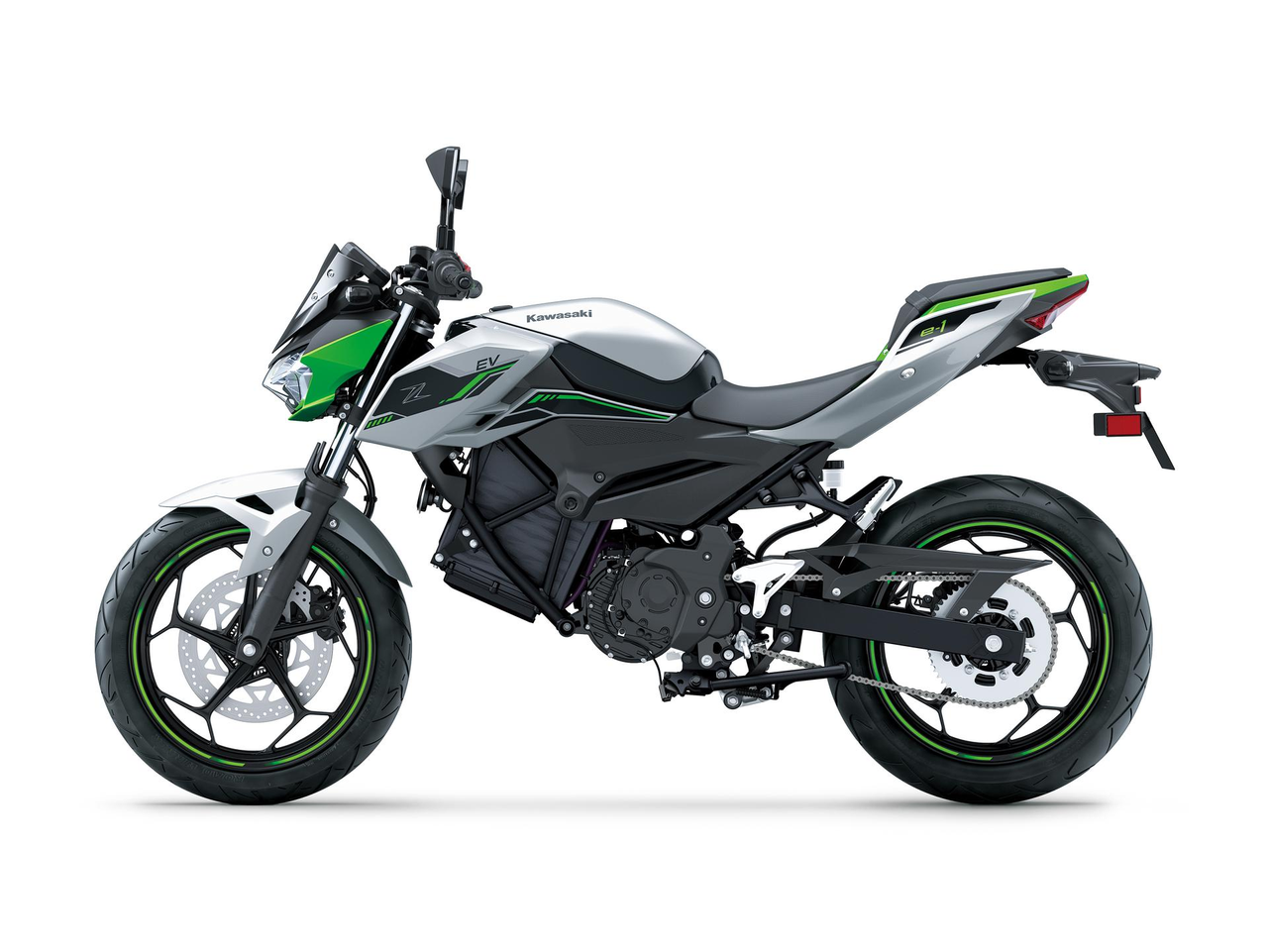
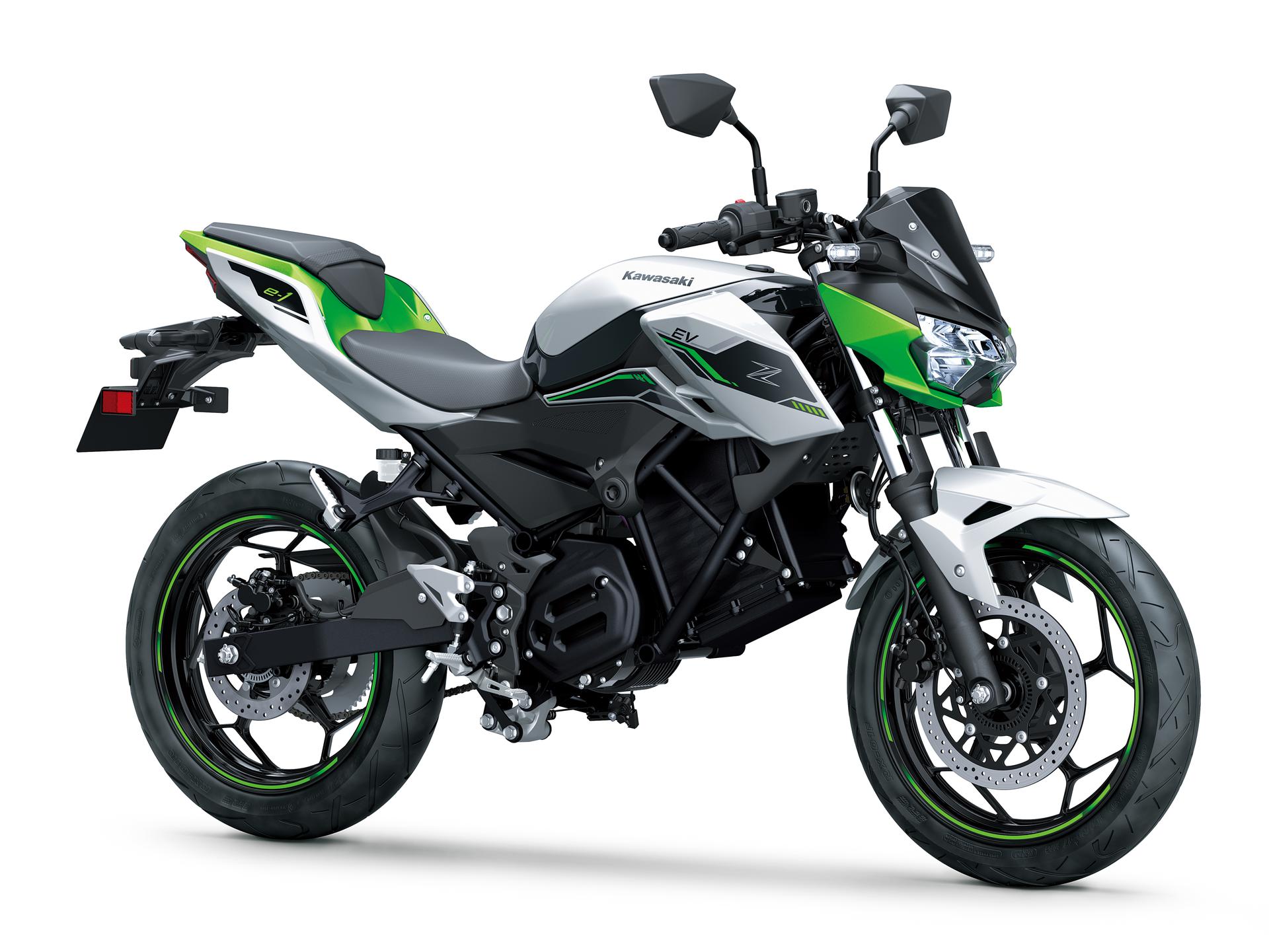
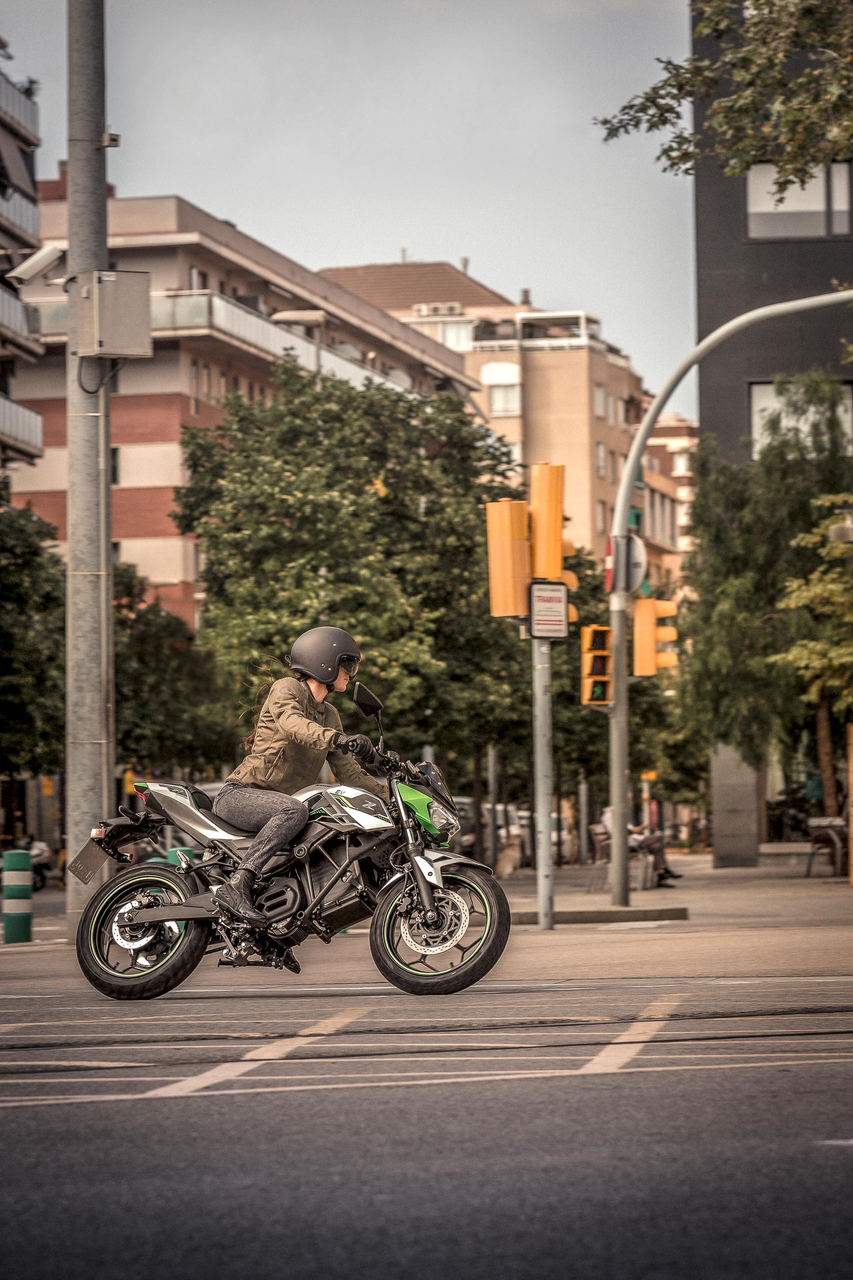
Z e-1’s minimalist bodywork evokes the streetfighter styling complemented by fresh, new silver and matte lime green colouring that both marks these models as Kawasakis while introducing a thematic tone for Kawasaki EV models, present and future. With the Z e-1 lightweight EV commuters, Kawasaki clearly show that good times are not limited to ICE models, and can be easily accessible to a wide range of riders.
Colour
Edition of Z e-1
₱597,000.00
Inpage Navigation Section: Gallery
Inpage Navigation Section: Features & Specs
- Features
- Technologies
- Specifications
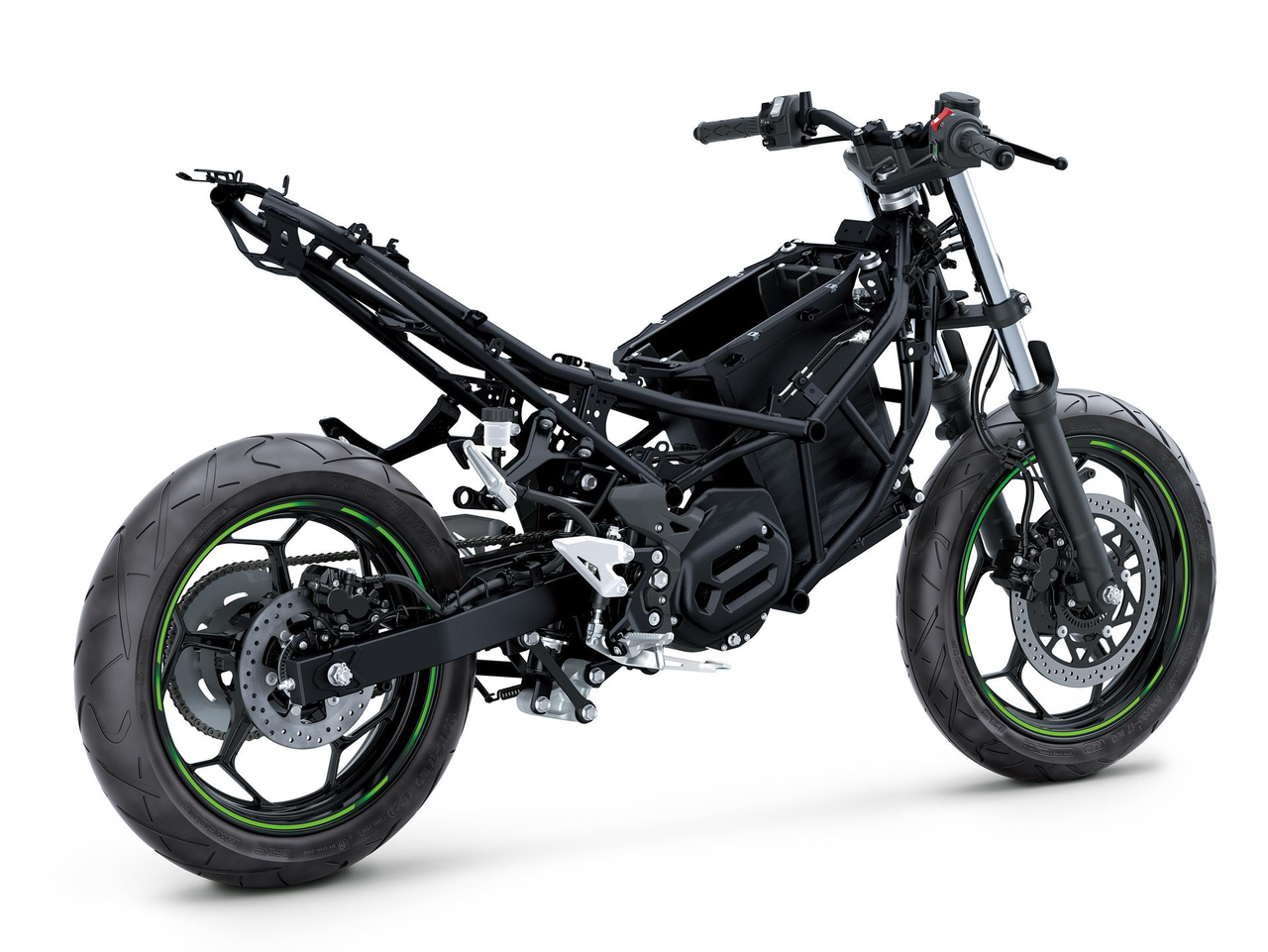
Solid Build: Kawasaki-Designed Motorcycle Chassis.
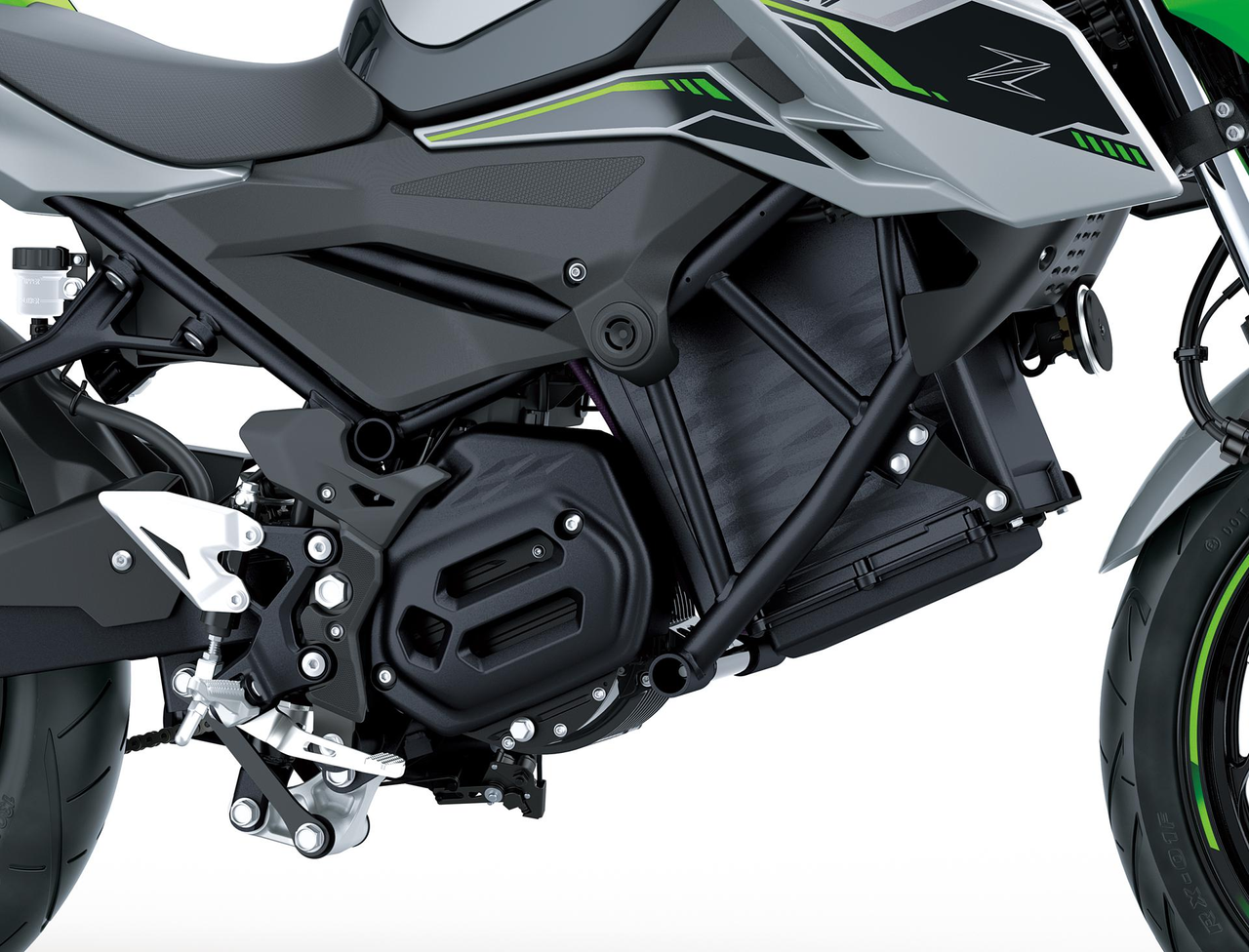
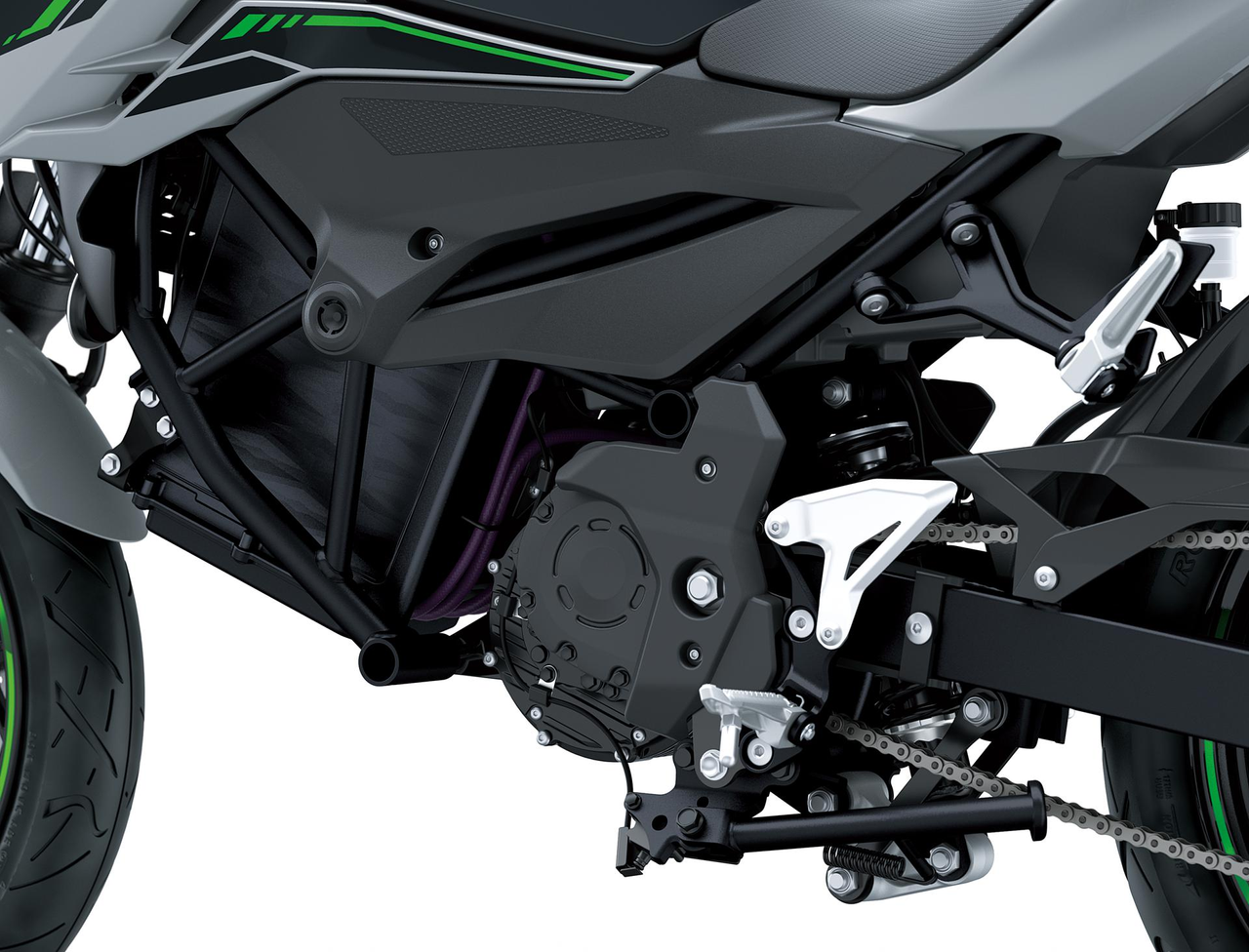
A chassis based on Kawasaki’s Ninja/Z400 motorcycles delivers sure-footed handing that riders will find reassuring. Built by a motorcycle manufacturer highly acclaimed for their reliability, the Ninja e-1 and Z e-1 offer the same solid build quality as all Kawasaki motorcycles.
Solid Build: Kawasaki-Designed Motorcycle Chassis.
A chassis based on Kawasaki’s Ninja/Z400 motorcycles delivers sure-footed handing that riders will find reassuring. Built by a motorcycle manufacturer highly acclaimed for their reliability, the Ninja e-1 and Z e-1 offer the same solid build quality as all Kawasaki motorcycles.
Nimble Handling
A frame with carefully tuned rigidity balance coupled with motorcycle suspension components with optimised settings give the Ninja e-1 and Z e-1 light, predictable handling and rider-friendly response.
Nimble Handling
A frame with carefully tuned rigidity balance coupled with motorcycle suspension components with optimised settings give the Ninja e-1 and Z e-1 light, predictable handling and rider-friendly response.
Disc Brakes with ABS
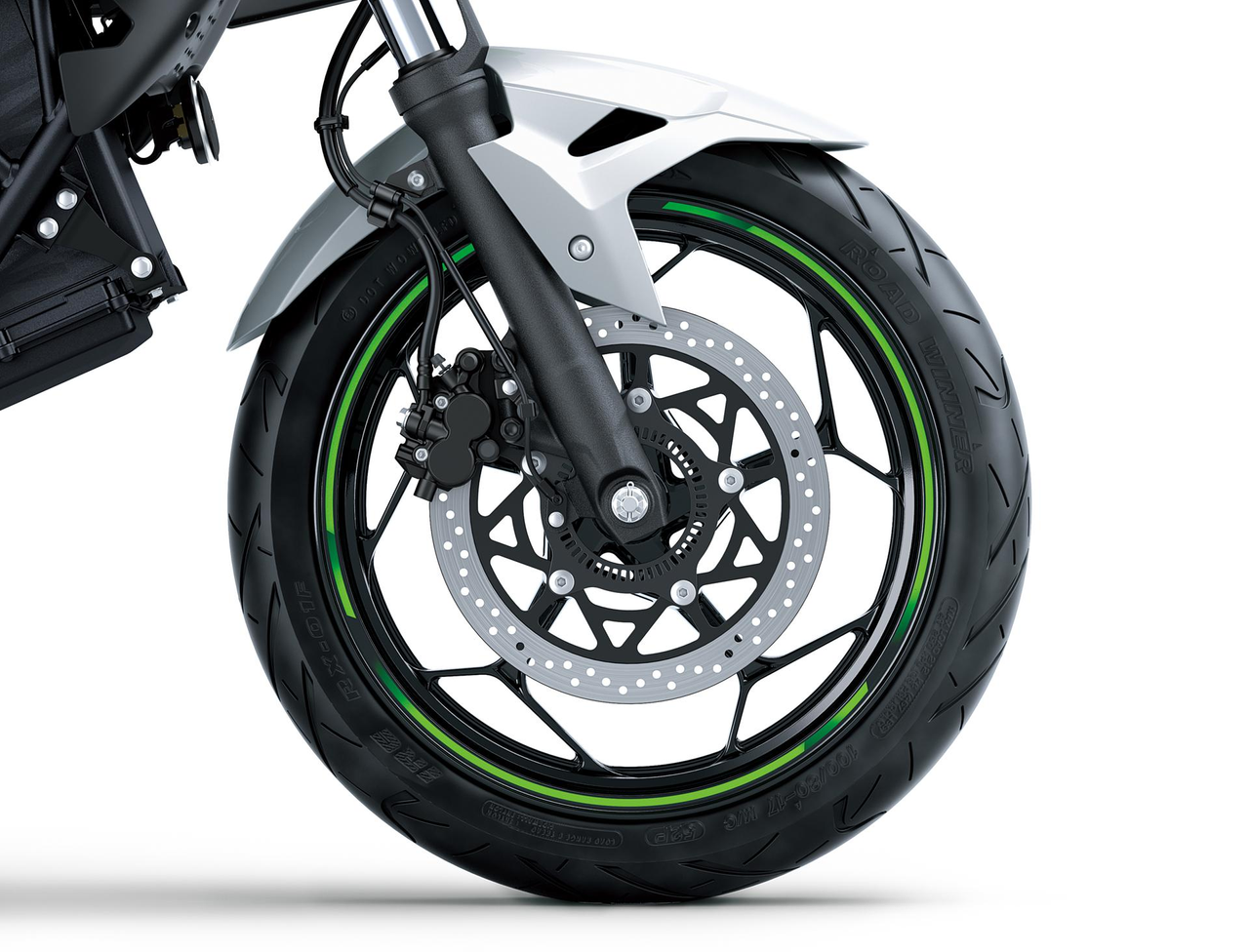
Front and rear disc brakes provide sure stopping performance, while ABS adds a measure of reassurance.
Disc Brakes with ABS
Front and rear disc brakes provide sure stopping performance, while ABS adds a measure of reassurance.
Regenerative System
Thanks to the regenerative system, the energy of deceleration is recycled back to the battery, contributing to a longer cruising range.
Regenerative System
Thanks to the regenerative system, the energy of deceleration is recycled back to the battery, contributing to a longer cruising range.
Max 9.0 kW (12 PS) Motor
Rated at 5.0 kW (9.0 kW max), the clean and quiet motor produces quick response and strong low-end power, facilitating control and contributing to quick acceleration from a stop.
Max 9.0 kW (12 PS) Motor
Rated at 5.0 kW (9.0 kW max), the clean and quiet motor produces quick response and strong low-end power, facilitating control and contributing to quick acceleration from a stop.
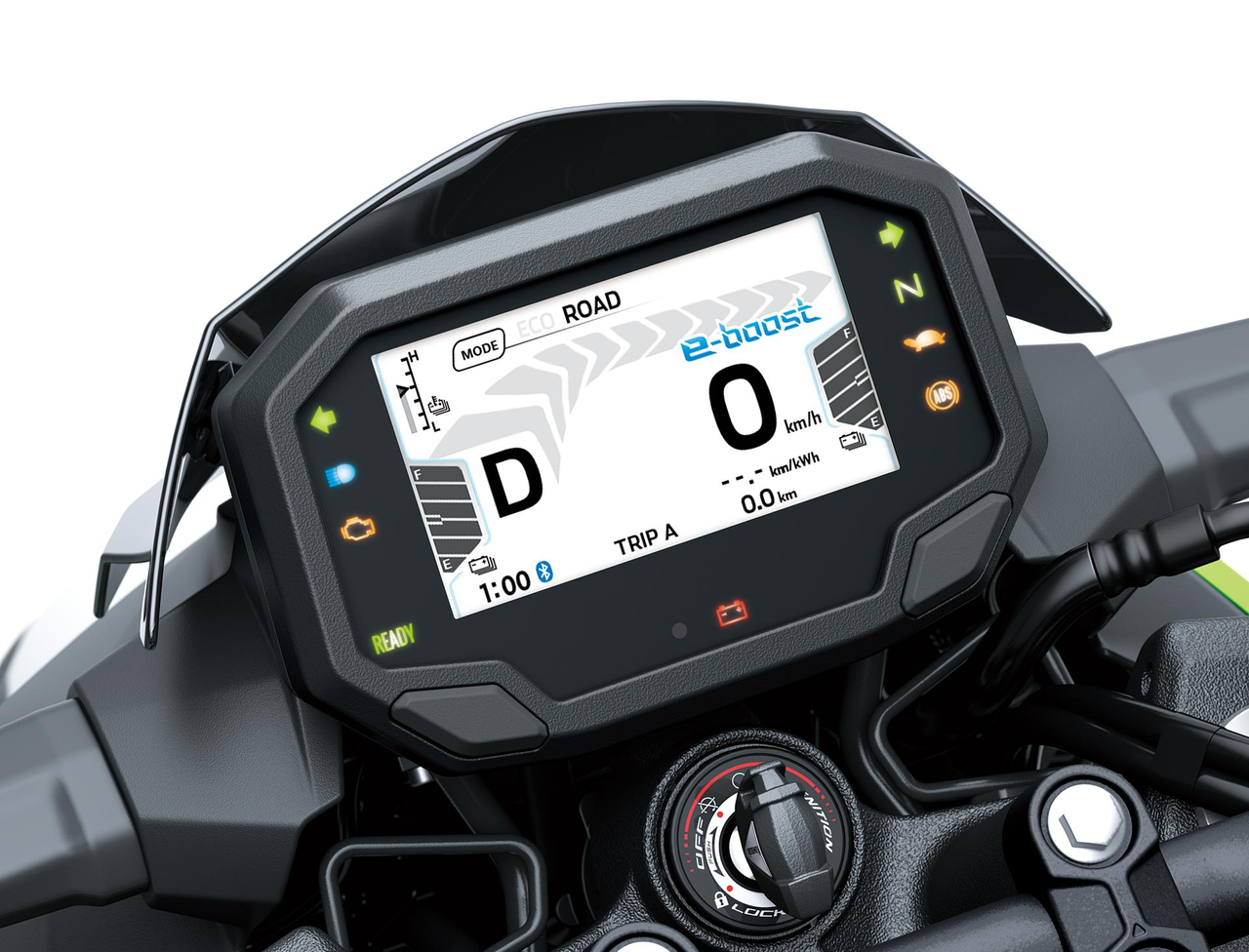
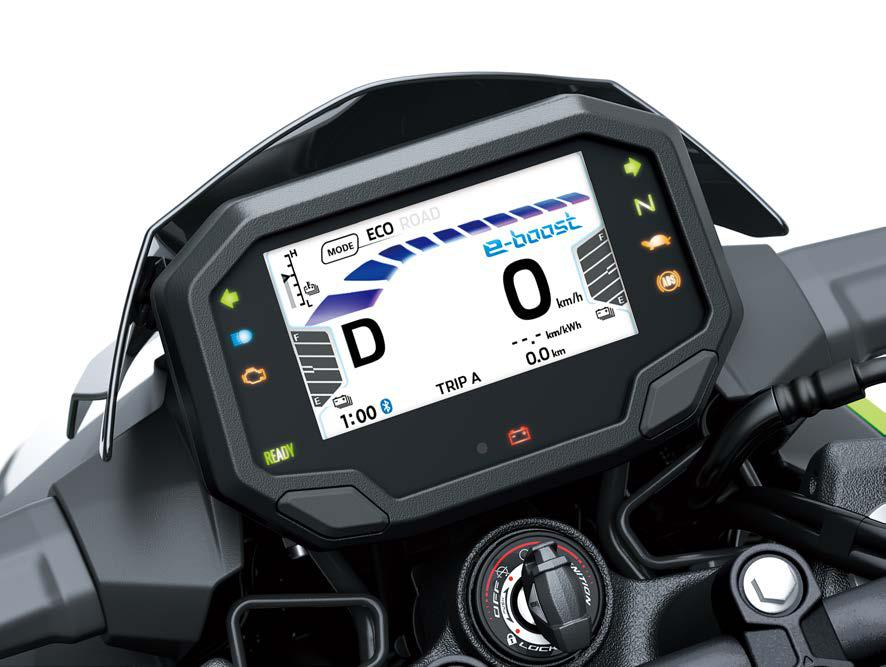
e-boost Function
With e-boost, riders can access increased power for approximately 15 seconds. When activated, acceleration is stronger and top speed is increased: 64 km/h >> 75 km/h (ECO), 88 km/h >> 99 km/h† (ROAD). [62 km/h >> 72 km/h (ECO), 85 km/h >> 99 km/h† km/h (ROAD) for Z e-1] † EUR spec: Top speed limited to 99 km/h in Europe.
e-boost Function
With e-boost, riders can access increased power for approximately 15 seconds. When activated, acceleration is stronger and top speed is increased: 64 km/h >> 75 km/h (ECO), 88 km/h >> 99 km/h† (ROAD). [62 km/h >> 72 km/h (ECO), 85 km/h >> 99 km/h† km/h (ROAD) for Z e-1] † EUR spec: Top speed limited to 99 km/h in Europe.
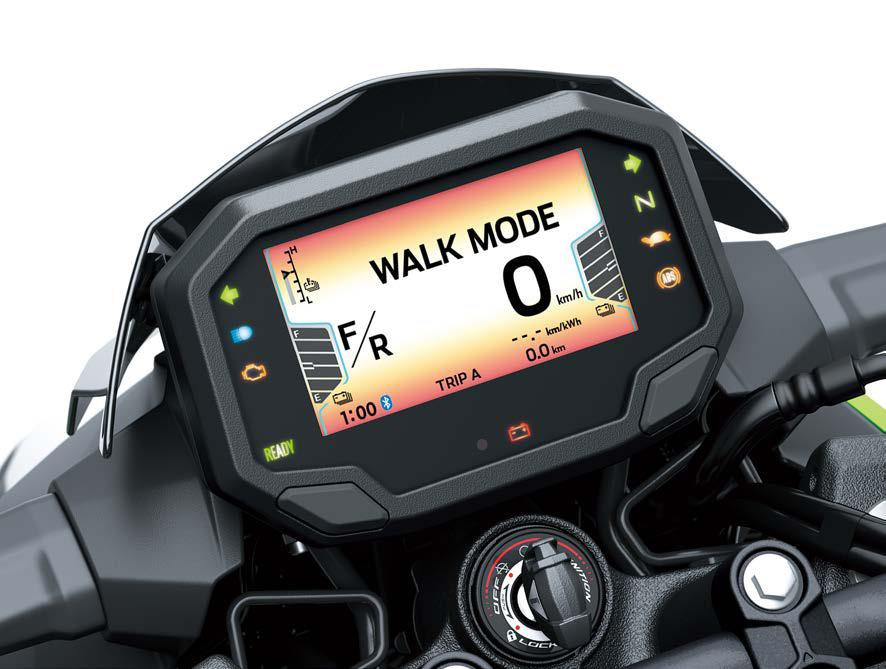
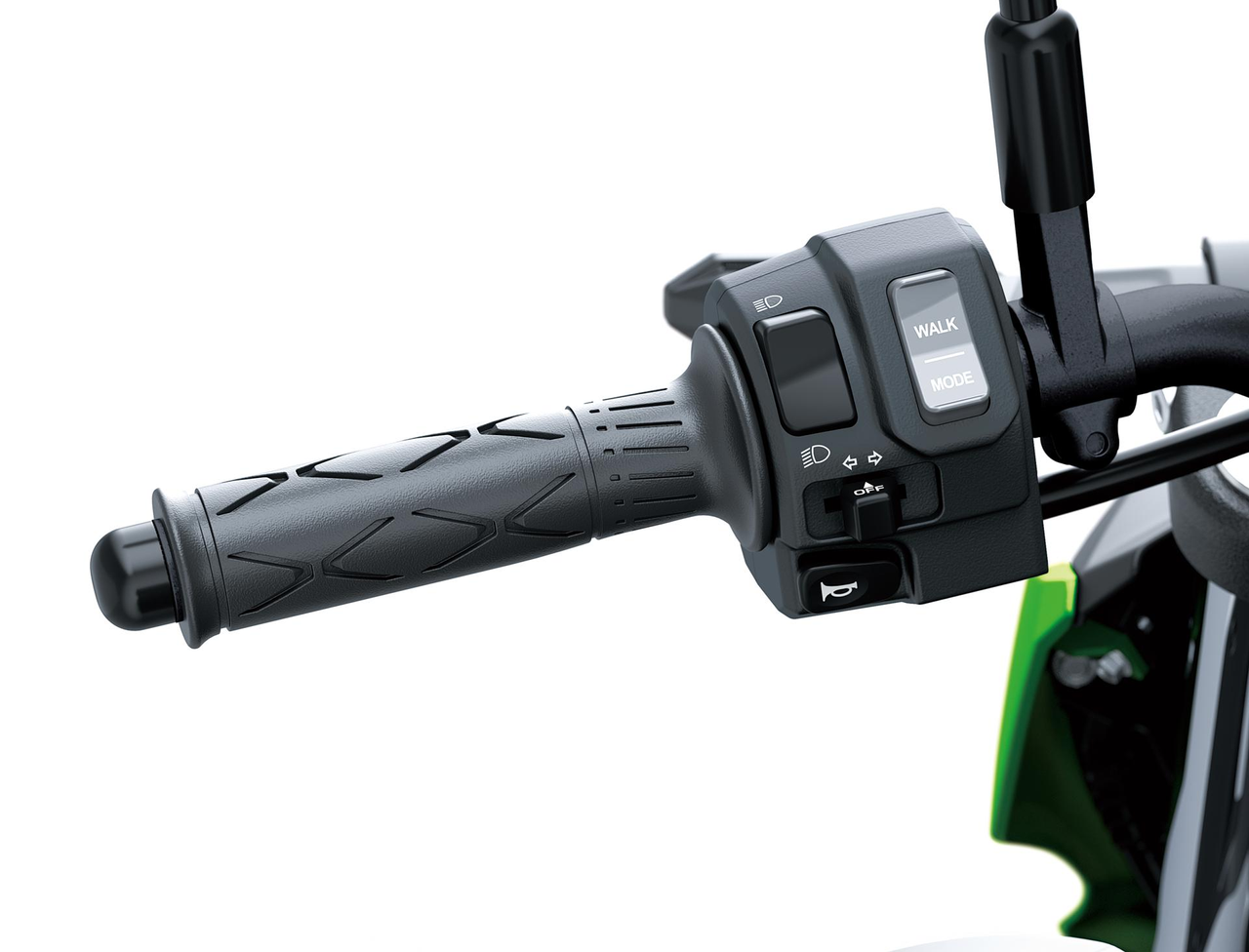
WALK Mode (with Reverse)
This convenient mode assists with manoeuvring in a parking lot. When engaged, opening the throttle moves the bike forward at walking speed. Closing the throttle past the “zero” point moves the bike in reverse.
WALK Mode (with Reverse)
This convenient mode assists with manoeuvring in a parking lot. When engaged, opening the throttle moves the bike forward at walking speed. Closing the throttle past the “zero” point moves the bike in reverse.
ROAD/ECO Modes
In addition to normal operation (ROAD), riders may also choose speed-limited operation (ECO). Top speed in ROAD Mode is 88 km/h (85 km/h for Z e-1), while top speed in ECO Mode is limited to 64 km/h (62 km/h for Z e-1).
ROAD/ECO Modes
In addition to normal operation (ROAD), riders may also choose speed-limited operation (ECO). Top speed in ROAD Mode is 88 km/h (85 km/h for Z e-1), while top speed in ECO Mode is limited to 64 km/h (62 km/h for Z e-1).
TFT Instrumentation with Smartphone Connectivity
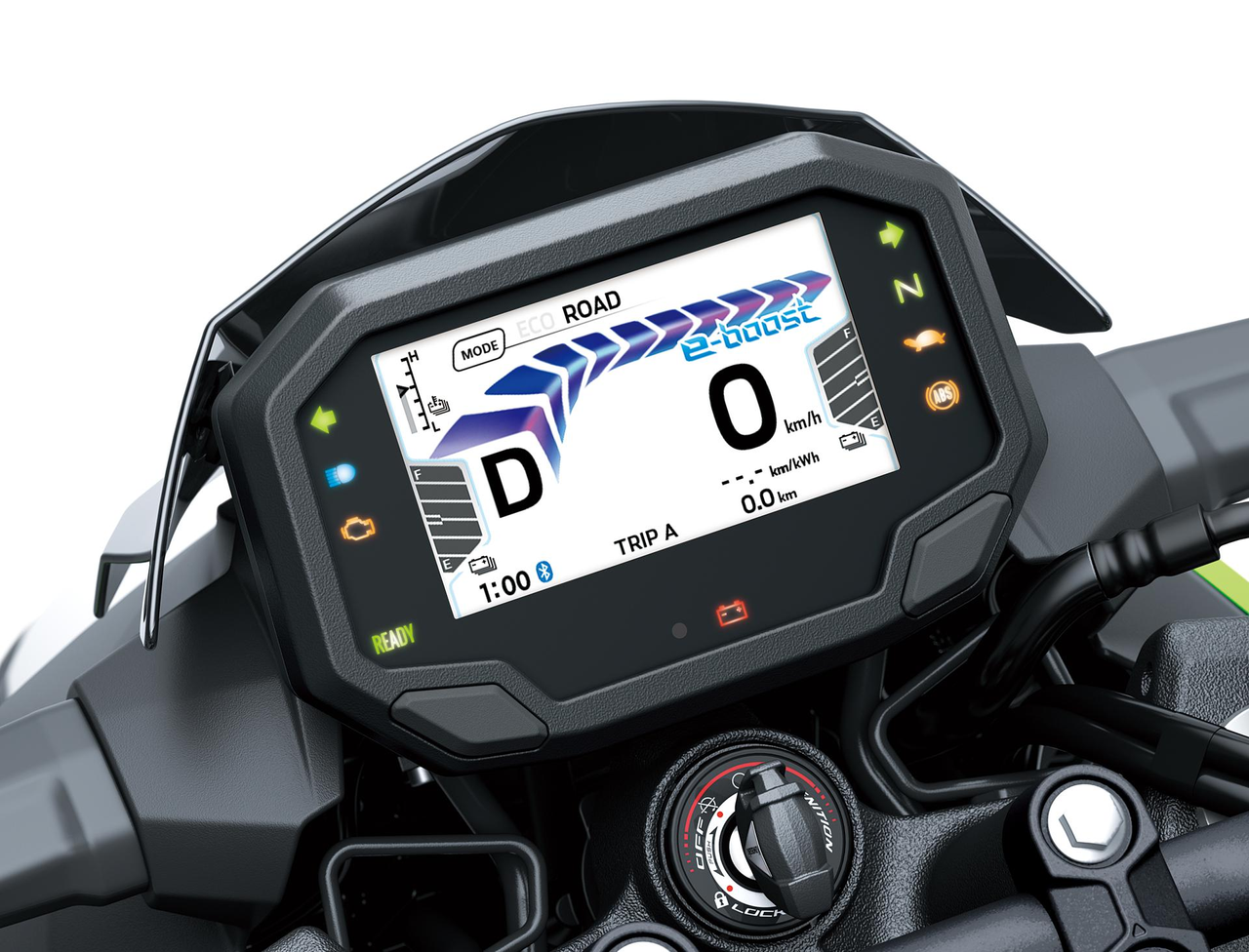
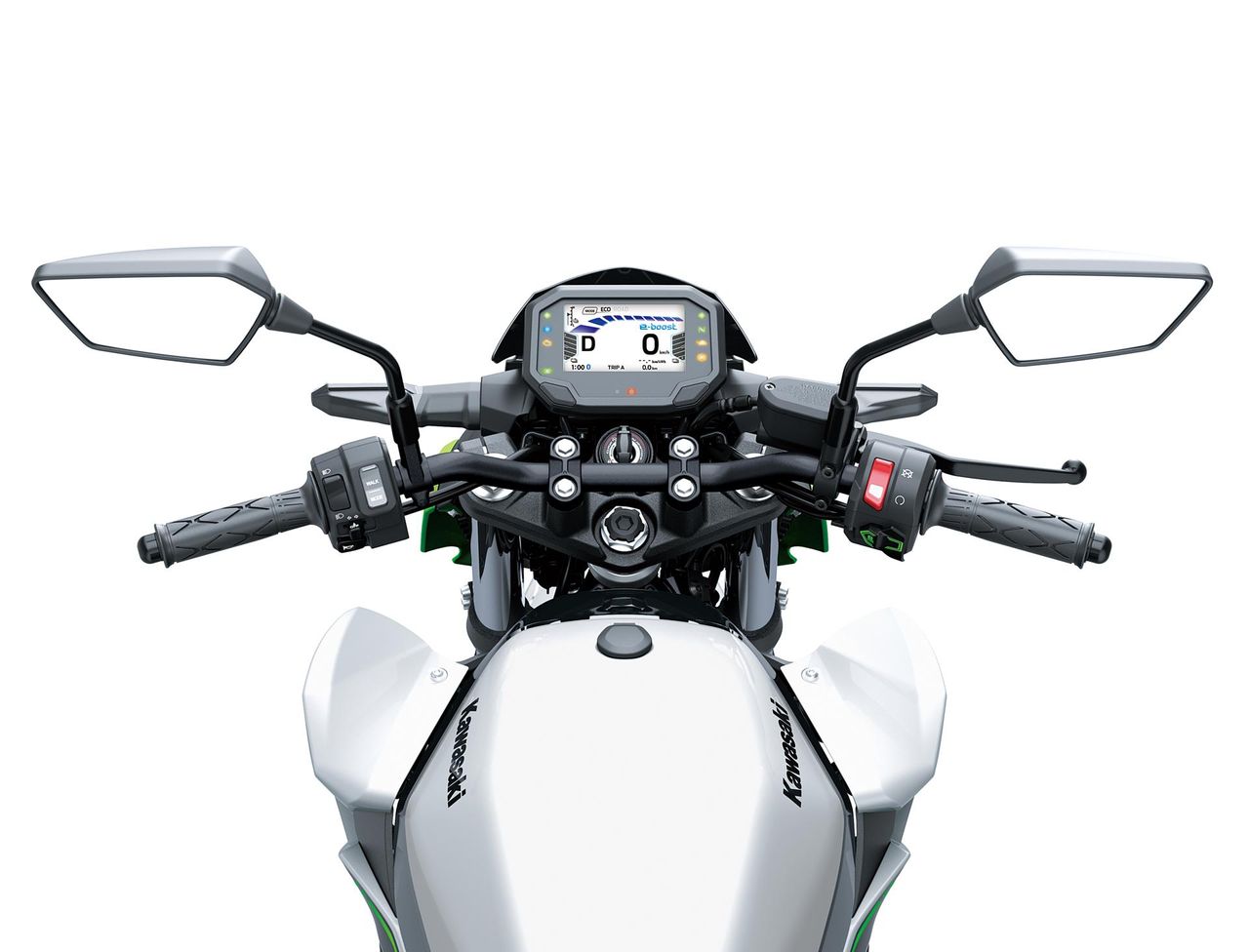
4.3” all-digital TFT colour instrumentation gives the cockpit a high-tech, high-grade appearance, while being able to connect to your ride wirelessly offers an enhanced motorcycling experience.
TFT Instrumentation with Smartphone Connectivity
4.3” all-digital TFT colour instrumentation gives the cockpit a high-tech, high-grade appearance, while being able to connect to your ride wirelessly offers an enhanced motorcycling experience.
Light Weight
At only 140 kg and 135 kg respectively, the light weight of the Ninja and Z e-1 contributes to a rider-friendly package.
Light Weight
At only 140 kg and 135 kg respectively, the light weight of the Ninja and Z e-1 contributes to a rider-friendly package.
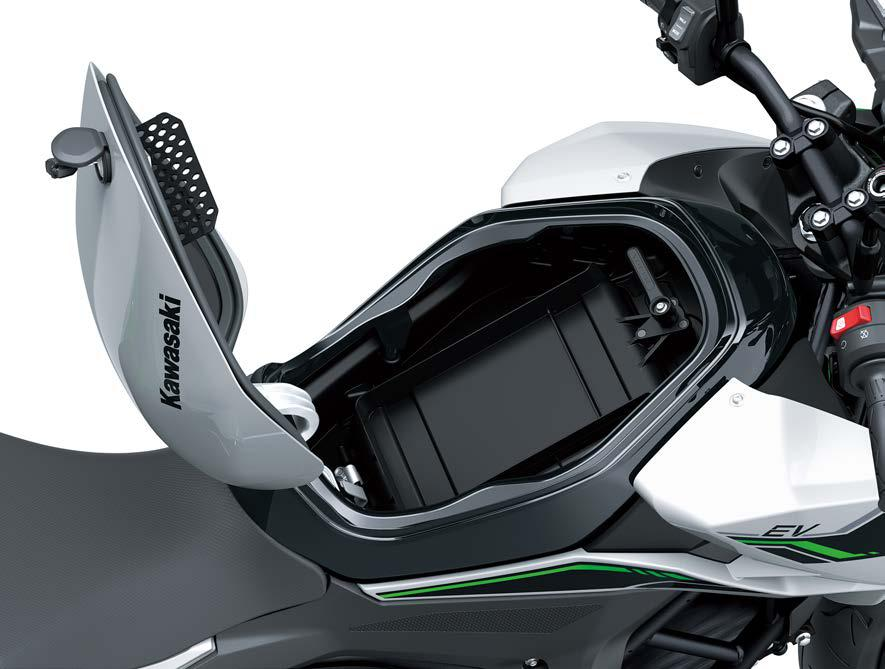
Convenient Storage Box
Lifting the storage box cover reveals 5 litres of easy-access space for small items like gloves or rain gear. (Max 3 kg)
Convenient Storage Box
Lifting the storage box cover reveals 5 litres of easy-access space for small items like gloves or rain gear. (Max 3 kg)
Naturally Relaxed Riding Position
Relaxed rider triangle accommodates a wide range of rider sizes and riding situations, contributing to the rider-friendly character. The relatively upright riding position and slightly foot-forward footpeg position put the rider in a position to control the bike while also offering rider comfort.
Naturally Relaxed Riding Position
Relaxed rider triangle accommodates a wide range of rider sizes and riding situations, contributing to the rider-friendly character. The relatively upright riding position and slightly foot-forward footpeg position put the rider in a position to control the bike while also offering rider comfort.
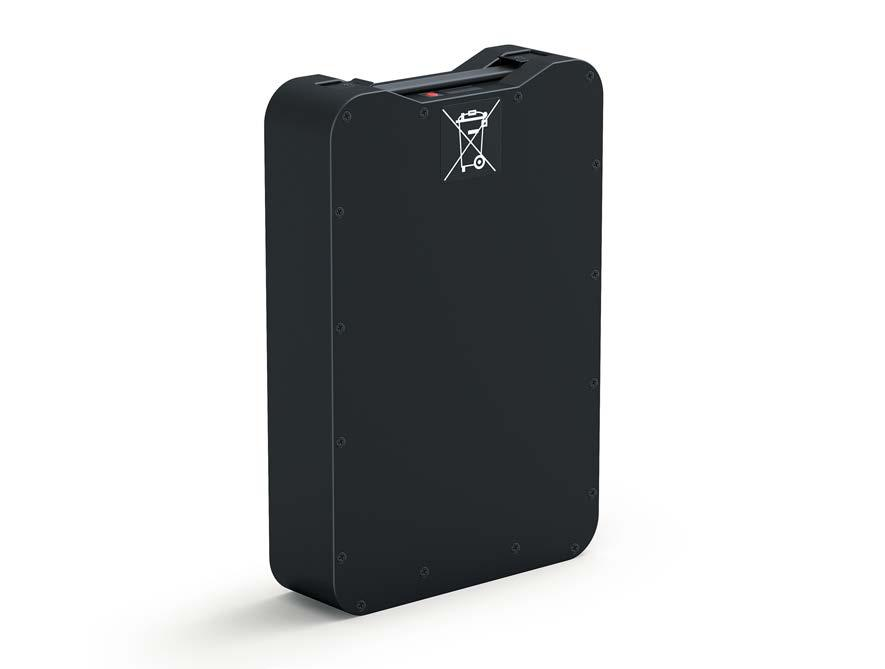
Dual Removable Batteries
Dual lithium-ion batteries weigh 11.5 kg each. Offboard† charging can be done by connecting the bike to a dedicated charger powered by a household outlet. Alternatively, the batteries can be removed and charged. Charging time per battery is approximately 3.7 hours for a full charge, 1.6 hours for a partial (20% >> 85%) charge. † Offboard charging refers to charging systems not native to the vehicle itself. Since the battery charger (which takes AC power and coverts it to the DC power needed to charge the batteries) is located outside the bike, this is an example of offboard charging.
Dual Removable Batteries
Dual lithium-ion batteries weigh 11.5 kg each. Offboard† charging can be done by connecting the bike to a dedicated charger powered by a household outlet. Alternatively, the batteries can be removed and charged. Charging time per battery is approximately 3.7 hours for a full charge, 1.6 hours for a partial (20% >> 85%) charge. † Offboard charging refers to charging systems not native to the vehicle itself. Since the battery charger (which takes AC power and coverts it to the DC power needed to charge the batteries) is located outside the bike, this is an example of offboard charging.
Kawasaki Ninja/Z Motorcycle Design & EV Colouring
Complementing the attractive Ninja and Z motorcycle styling, silver and matte lime green colouring offers a fresh, futuristic image for Kawasaki’s EV models.
Kawasaki Ninja/Z Motorcycle Design & EV Colouring
Complementing the attractive Ninja and Z motorcycle styling, silver and matte lime green colouring offers a fresh, futuristic image for Kawasaki’s EV models.
Zero Emissions
Powered by an electric motor, the Ninja and Z e-1 create no emissions when being operated.
Zero Emissions
Powered by an electric motor, the Ninja and Z e-1 create no emissions when being operated.
No-Clutch Operation
Having no clutch to operate—riders need only twist the throttle—greatly simplifies operation and contributes to a rider-friendly package.

No-Clutch Operation
Having no clutch to operate—riders need only twist the throttle—greatly simplifies operation and contributes to a rider-friendly package.
- Solid Build: Kawasaki-Designed Motorcycle Chassis.
- Nimble Handling
- Disc Brakes with ABS
- Regenerative System
- Max 9.0 kW (12 PS) Motor
- e-boost Function
- WALK Mode (with Reverse)
- ROAD/ECO Modes
- TFT Instrumentation with Smartphone Connectivity
- Light Weight
- Convenient Storage Box
- Naturally Relaxed Riding Position
- Dual Removable Batteries
- Kawasaki Ninja/Z Motorcycle Design & EV Colouring
- Zero Emissions
- No-Clutch Operation
Solid Build: Kawasaki-Designed Motorcycle Chassis.
A chassis based on Kawasaki’s Ninja/Z400 motorcycles delivers sure-footed handing that riders will find reassuring. Built by a motorcycle manufacturer highly acclaimed for their reliability, the Ninja e-1 and Z e-1 offer the same solid build quality as all Kawasaki motorcycles.
Solid Build: Kawasaki-Designed Motorcycle Chassis.
A chassis based on Kawasaki’s Ninja/Z400 motorcycles delivers sure-footed handing that riders will find reassuring. Built by a motorcycle manufacturer highly acclaimed for their reliability, the Ninja e-1 and Z e-1 offer the same solid build quality as all Kawasaki motorcycles.
Nimble Handling
A frame with carefully tuned rigidity balance coupled with motorcycle suspension components with optimised settings give the Ninja e-1 and Z e-1 light, predictable handling and rider-friendly response.
Nimble Handling
A frame with carefully tuned rigidity balance coupled with motorcycle suspension components with optimised settings give the Ninja e-1 and Z e-1 light, predictable handling and rider-friendly response.
Disc Brakes with ABS
Front and rear disc brakes provide sure stopping performance, while ABS adds a measure of reassurance.
Disc Brakes with ABS
Front and rear disc brakes provide sure stopping performance, while ABS adds a measure of reassurance.
Regenerative System
Thanks to the regenerative system, the energy of deceleration is recycled back to the battery, contributing to a longer cruising range.
Regenerative System
Thanks to the regenerative system, the energy of deceleration is recycled back to the battery, contributing to a longer cruising range.
Max 9.0 kW (12 PS) Motor
Rated at 5.0 kW (9.0 kW max), the clean and quiet motor produces quick response and strong low-end power, facilitating control and contributing to quick acceleration from a stop.
Max 9.0 kW (12 PS) Motor
Rated at 5.0 kW (9.0 kW max), the clean and quiet motor produces quick response and strong low-end power, facilitating control and contributing to quick acceleration from a stop.
e-boost Function
With e-boost, riders can access increased power for approximately 15 seconds. When activated, acceleration is stronger and top speed is increased: 64 km/h >> 75 km/h (ECO), 88 km/h >> 99 km/h† (ROAD). [62 km/h >> 72 km/h (ECO), 85 km/h >> 99 km/h† km/h (ROAD) for Z e-1] † EUR spec: Top speed limited to 99 km/h in Europe.
e-boost Function
With e-boost, riders can access increased power for approximately 15 seconds. When activated, acceleration is stronger and top speed is increased: 64 km/h >> 75 km/h (ECO), 88 km/h >> 99 km/h† (ROAD). [62 km/h >> 72 km/h (ECO), 85 km/h >> 99 km/h† km/h (ROAD) for Z e-1] † EUR spec: Top speed limited to 99 km/h in Europe.
WALK Mode (with Reverse)
This convenient mode assists with manoeuvring in a parking lot. When engaged, opening the throttle moves the bike forward at walking speed. Closing the throttle past the “zero” point moves the bike in reverse.
WALK Mode (with Reverse)
This convenient mode assists with manoeuvring in a parking lot. When engaged, opening the throttle moves the bike forward at walking speed. Closing the throttle past the “zero” point moves the bike in reverse.
ROAD/ECO Modes
In addition to normal operation (ROAD), riders may also choose speed-limited operation (ECO). Top speed in ROAD Mode is 88 km/h (85 km/h for Z e-1), while top speed in ECO Mode is limited to 64 km/h (62 km/h for Z e-1).
ROAD/ECO Modes
In addition to normal operation (ROAD), riders may also choose speed-limited operation (ECO). Top speed in ROAD Mode is 88 km/h (85 km/h for Z e-1), while top speed in ECO Mode is limited to 64 km/h (62 km/h for Z e-1).
TFT Instrumentation with Smartphone Connectivity
4.3” all-digital TFT colour instrumentation gives the cockpit a high-tech, high-grade appearance, while being able to connect to your ride wirelessly offers an enhanced motorcycling experience.
TFT Instrumentation with Smartphone Connectivity
4.3” all-digital TFT colour instrumentation gives the cockpit a high-tech, high-grade appearance, while being able to connect to your ride wirelessly offers an enhanced motorcycling experience.
Light Weight
At only 140 kg and 135 kg respectively, the light weight of the Ninja and Z e-1 contributes to a rider-friendly package.
Light Weight
At only 140 kg and 135 kg respectively, the light weight of the Ninja and Z e-1 contributes to a rider-friendly package.
Convenient Storage Box
Lifting the storage box cover reveals 5 litres of easy-access space for small items like gloves or rain gear. (Max 3 kg)
Convenient Storage Box
Lifting the storage box cover reveals 5 litres of easy-access space for small items like gloves or rain gear. (Max 3 kg)
Naturally Relaxed Riding Position
Relaxed rider triangle accommodates a wide range of rider sizes and riding situations, contributing to the rider-friendly character. The relatively upright riding position and slightly foot-forward footpeg position put the rider in a position to control the bike while also offering rider comfort.
Naturally Relaxed Riding Position
Relaxed rider triangle accommodates a wide range of rider sizes and riding situations, contributing to the rider-friendly character. The relatively upright riding position and slightly foot-forward footpeg position put the rider in a position to control the bike while also offering rider comfort.
Dual Removable Batteries
Dual lithium-ion batteries weigh 11.5 kg each. Offboard† charging can be done by connecting the bike to a dedicated charger powered by a household outlet. Alternatively, the batteries can be removed and charged. Charging time per battery is approximately 3.7 hours for a full charge, 1.6 hours for a partial (20% >> 85%) charge. † Offboard charging refers to charging systems not native to the vehicle itself. Since the battery charger (which takes AC power and coverts it to the DC power needed to charge the batteries) is located outside the bike, this is an example of offboard charging.
Dual Removable Batteries
Dual lithium-ion batteries weigh 11.5 kg each. Offboard† charging can be done by connecting the bike to a dedicated charger powered by a household outlet. Alternatively, the batteries can be removed and charged. Charging time per battery is approximately 3.7 hours for a full charge, 1.6 hours for a partial (20% >> 85%) charge. † Offboard charging refers to charging systems not native to the vehicle itself. Since the battery charger (which takes AC power and coverts it to the DC power needed to charge the batteries) is located outside the bike, this is an example of offboard charging.
Kawasaki Ninja/Z Motorcycle Design & EV Colouring
Complementing the attractive Ninja and Z motorcycle styling, silver and matte lime green colouring offers a fresh, futuristic image for Kawasaki’s EV models.
Kawasaki Ninja/Z Motorcycle Design & EV Colouring
Complementing the attractive Ninja and Z motorcycle styling, silver and matte lime green colouring offers a fresh, futuristic image for Kawasaki’s EV models.
Zero Emissions
Powered by an electric motor, the Ninja and Z e-1 create no emissions when being operated.
Zero Emissions
Powered by an electric motor, the Ninja and Z e-1 create no emissions when being operated.
No-Clutch Operation
Having no clutch to operate—riders need only twist the throttle—greatly simplifies operation and contributes to a rider-friendly package.

No-Clutch Operation
Having no clutch to operate—riders need only twist the throttle—greatly simplifies operation and contributes to a rider-friendly package.

Power Modes
Power Mode selection allows engine power delivery to be changed to suit the riding situation.
Power Modes
Models equipped with multiple Power Modes offer riders an easily selectable choice of engine power delivery to suit riding conditions or preference. In addition to Full Power mode, one (Low) or two (Middle, Low) alternate mode(s) in which maximum power is limited and throttle response is milder are provided.
Smartphone Connectivity
Smartphone connectivity contributes to an enhanced motorcycling experience by enabling riders to connect to their motorcycle wirelessly.
Smartphone Connectivity
Clever technology enables riders to connect to their motorcycle wirelessly. Using the smartphone application RIDEOLOGY THE APP a number of instrument functions can be accessed, contributing to an enhanced motorcycling experience. Vehicle information (such as the odometer, fuel gauge, maintenance schedule, etc) can be viewed on the smartphone. Riding logs (varies by model, but may include GPS route, gear position, rpm, and other information) can be viewed on the smartphone. When connected, telephone (call, mail) notices are displayed on the instrument panel. Riders can also make changes to their motorcycle instrument display settings (preferred units, clock and date setting, etc) via the smartphone. And on certain models, it is even possible to check and adjust vehicle settings (such as Rider Mode, electronic rider support features, and payload settings) using the smartphone.
ERGO-FIT
ERGO-FIT is an interface system that allows a wide range of riders to feel at one with their machine.
ERGO-FIT
Proper fit is key for rider comfort and control. However, the ideal fit varies from rider to rider, depending on their physical dimensions and riding style. ERGO-FIT is an interface system designed to allow riders to find their ideal riding position. Various points of the chassis interface (the handlebar, footpegs and seat, etc) can be adjusted through a combination of interchangeable parts and parts with adjustable positions. This enables a wide range of riders to find a riding position that offers both comfort and control. Feeling at one with their machine, they will be able to experience how Kawasaki machines are fun and rewarding to ride. *Adjustable parts and their range of adjustability vary by model.
ABS
ABS (Anti-lock Brake System) ensures stable braking performance by preventing wheel lock during braking.
ABS
Sudden over-application of the brakes, or braking on low-grip surfaces (surfaces with a low coefficient of friction) such as wet asphalt or manhole covers may cause a motorcycle's wheel(s) to lock up and slip. ABS was developed to prevent such incidents. Kawasaki ABS systems are controlled by high precision and highly reliable programming formulated based on thorough testing of numerous riding situations. By ensuring stable braking performance, they offer rider reassurance that contributes to greater riding enjoyment. And to meet the special requirements of certain riders, specialised ABS systems are also available. For example, KIBS (Kawasaki Intelligent anti-lock Brake System) is a high-precision brake system designed specifically for supersport models, enabling sport riding to be enjoyed by a wider range of riders. And by linking the front and rear brakes, K-ACT (Kawasaki Advanced Coactive-braking Technology) ABS provides the confidence to enjoy touring on heavyweight models. Kawasaki is continually working on the development of other advanced ABS systems.
WALK Mode (with Reverse)
WALK Mode assists with maneuvering in a parking lot. When engaged, opening the throttle moves the bike forward at walking speed. Closing the throttle past the “zero” point moves the bike in reverse.
WALK Mode (with Reverse)
This convenient mode assists with maneuvering in a parking lot. When engaged, opening the throttle moves the bike forward at walking speed. Closing the throttle past the “zero” point moves the bike in reverse.
With the bike stopped and the throttle closed, WALK Mode is activated by pressing and holding the WALK Mode button. Once activated, the screen background turns orange to clearly distinguish from normal operation.
Zero Emissions
When operating exclusively using the electric motor, no emissions are created.
Zero Emissions
When operating exclusively using the electric motor, no emissions are created.
e-boost Function
The e-boost function allows riders to briefly tap into extra power for stronger acceleration and a higher top speed.
e-boost Function
Unique to Kawasaki’s EV and HEV models, e-boost allows riders to briefly tap into extra power for stronger acceleration and a higher top speed.
To prevent battery overheating, e-boost operation is limited (time varies by model). When all conditions have been met, e-boost availability will be shown on the screen via indicator or the e-boost gauge. Pressing the button on the right handle activates the function, increasing power and torque. The e-boost gauge (now purple) counts down the remaining time available. Once the bike is ready again, the e-boost function can be activated once more.
e-boost can be activated on-the-fly (while riding) or when stopped.
EV (Electric Vehicle)
Powered by electric motors, Kawasaki electric vehicles offer a clean and quiet alternative to models powered by internal combustion engines, while maintaining the riding excitement for which Kawasaki models are known.
EV (Electric Vehicle)
As the world moves towards Carbon Neutrality, Kawasaki is developing a number of future mobility solutions. Kawasaki electric vehicles offer a clean and quiet alternative to models powered by internal combustion engines (ICE). Leveraging a long history of producing motorcycles designed to be fun to ride and fun to control, Kawasaki’s EV bikes maintain the riding excitement for which Kawasaki motorcycles are known. Strong off-the-line acceleration and response is complemented by attractive motorcycle styling and a motorcycle-like riding character that offers confident handling and light maneuverability, showing that good times are not limited to ICE models, and can be easily accessible to a wide range of riders.
- Power Modes
- Smartphone Connectivity
- ERGO-FIT
- ABS
- WALK Mode (with Reverse)
- Zero Emissions
- e-boost Function
- EV (Electric Vehicle)
Power Modes
Power Mode selection allows engine power delivery to be changed to suit the riding situation.
Power Modes
Models equipped with multiple Power Modes offer riders an easily selectable choice of engine power delivery to suit riding conditions or preference. In addition to Full Power mode, one (Low) or two (Middle, Low) alternate mode(s) in which maximum power is limited and throttle response is milder are provided.
Smartphone Connectivity
Smartphone connectivity contributes to an enhanced motorcycling experience by enabling riders to connect to their motorcycle wirelessly.
Smartphone Connectivity
Clever technology enables riders to connect to their motorcycle wirelessly. Using the smartphone application RIDEOLOGY THE APP a number of instrument functions can be accessed, contributing to an enhanced motorcycling experience. Vehicle information (such as the odometer, fuel gauge, maintenance schedule, etc) can be viewed on the smartphone. Riding logs (varies by model, but may include GPS route, gear position, rpm, and other information) can be viewed on the smartphone. When connected, telephone (call, mail) notices are displayed on the instrument panel. Riders can also make changes to their motorcycle instrument display settings (preferred units, clock and date setting, etc) via the smartphone. And on certain models, it is even possible to check and adjust vehicle settings (such as Rider Mode, electronic rider support features, and payload settings) using the smartphone.
ERGO-FIT
ERGO-FIT is an interface system that allows a wide range of riders to feel at one with their machine.
ERGO-FIT
Proper fit is key for rider comfort and control. However, the ideal fit varies from rider to rider, depending on their physical dimensions and riding style. ERGO-FIT is an interface system designed to allow riders to find their ideal riding position. Various points of the chassis interface (the handlebar, footpegs and seat, etc) can be adjusted through a combination of interchangeable parts and parts with adjustable positions. This enables a wide range of riders to find a riding position that offers both comfort and control. Feeling at one with their machine, they will be able to experience how Kawasaki machines are fun and rewarding to ride. *Adjustable parts and their range of adjustability vary by model.
ABS
ABS (Anti-lock Brake System) ensures stable braking performance by preventing wheel lock during braking.
ABS
Sudden over-application of the brakes, or braking on low-grip surfaces (surfaces with a low coefficient of friction) such as wet asphalt or manhole covers may cause a motorcycle's wheel(s) to lock up and slip. ABS was developed to prevent such incidents. Kawasaki ABS systems are controlled by high precision and highly reliable programming formulated based on thorough testing of numerous riding situations. By ensuring stable braking performance, they offer rider reassurance that contributes to greater riding enjoyment. And to meet the special requirements of certain riders, specialised ABS systems are also available. For example, KIBS (Kawasaki Intelligent anti-lock Brake System) is a high-precision brake system designed specifically for supersport models, enabling sport riding to be enjoyed by a wider range of riders. And by linking the front and rear brakes, K-ACT (Kawasaki Advanced Coactive-braking Technology) ABS provides the confidence to enjoy touring on heavyweight models. Kawasaki is continually working on the development of other advanced ABS systems.
WALK Mode (with Reverse)
WALK Mode assists with maneuvering in a parking lot. When engaged, opening the throttle moves the bike forward at walking speed. Closing the throttle past the “zero” point moves the bike in reverse.
WALK Mode (with Reverse)
This convenient mode assists with maneuvering in a parking lot. When engaged, opening the throttle moves the bike forward at walking speed. Closing the throttle past the “zero” point moves the bike in reverse.
With the bike stopped and the throttle closed, WALK Mode is activated by pressing and holding the WALK Mode button. Once activated, the screen background turns orange to clearly distinguish from normal operation.
Zero Emissions
When operating exclusively using the electric motor, no emissions are created.
Zero Emissions
When operating exclusively using the electric motor, no emissions are created.
e-boost Function
The e-boost function allows riders to briefly tap into extra power for stronger acceleration and a higher top speed.
e-boost Function
Unique to Kawasaki’s EV and HEV models, e-boost allows riders to briefly tap into extra power for stronger acceleration and a higher top speed.
To prevent battery overheating, e-boost operation is limited (time varies by model). When all conditions have been met, e-boost availability will be shown on the screen via indicator or the e-boost gauge. Pressing the button on the right handle activates the function, increasing power and torque. The e-boost gauge (now purple) counts down the remaining time available. Once the bike is ready again, the e-boost function can be activated once more.
e-boost can be activated on-the-fly (while riding) or when stopped.
EV (Electric Vehicle)
Powered by electric motors, Kawasaki electric vehicles offer a clean and quiet alternative to models powered by internal combustion engines, while maintaining the riding excitement for which Kawasaki models are known.
EV (Electric Vehicle)
As the world moves towards Carbon Neutrality, Kawasaki is developing a number of future mobility solutions. Kawasaki electric vehicles offer a clean and quiet alternative to models powered by internal combustion engines (ICE). Leveraging a long history of producing motorcycles designed to be fun to ride and fun to control, Kawasaki’s EV bikes maintain the riding excitement for which Kawasaki motorcycles are known. Strong off-the-line acceleration and response is complemented by attractive motorcycle styling and a motorcycle-like riding character that offers confident handling and light maneuverability, showing that good times are not limited to ICE models, and can be easily accessible to a wide range of riders.
Traction Battery
| Battery type | Lithium-ion battery pack (x2) |
|---|---|
| Nominal voltage | 50.4 V |
| Total nominal capacity | 30 Ah (x2) |
| Total battery weight | 11.5 kg (x2) |
| Charging time (0 to 100%) | 3.7 h (x2) |
Performance & Transmission
| Rated power | 5.0 kW {6.8 PS} / 2,800 rpm |
|---|---|
| Maximum speed ECO mode | 62 km/h (72 km/h with e-Boost) |
| Maximum speed ROAD mode | 101 km(99 km/h with e-Boost) |
| Range | 72 km (approximate) |
| Primary reduction ratio | 3.211 (61/19) |
| Final drive | Chain |
| Final reduction ratio | 3.867 (58/15) |
Frame & Dimensions
| Rake | 24.4 ° |
|---|---|
| Trail | 93 mm |
| Wheel travel front | 120 mm |
| Wheel travel rear | 133 mm |
| L x W x H | 1,980 x 730 x 1,035 mm |
| Steering angle L/R | 35° / 35° |
| Wheel base | 1,370 mm |
| Ground clearance | 170 mm |
| Seat height | 785 mm |
| Curb mass | 135 kg |
Brakes & Suspension
| Front brake type | Single disc |
|---|---|
| Front brake diameter | Ø 290 mm |
| Front brake caliper type | Dual-piston |
| Rear brake type | Single disc |
| Rear brake diameter | Ø 220 mm |
| Rear brake caliper type | Dual-piston |
| Front suspension type | Telescopic fork |
| Front suspension diameter | Ø 41 mm |
Inpage Navigation Section: Accessories
Accessories
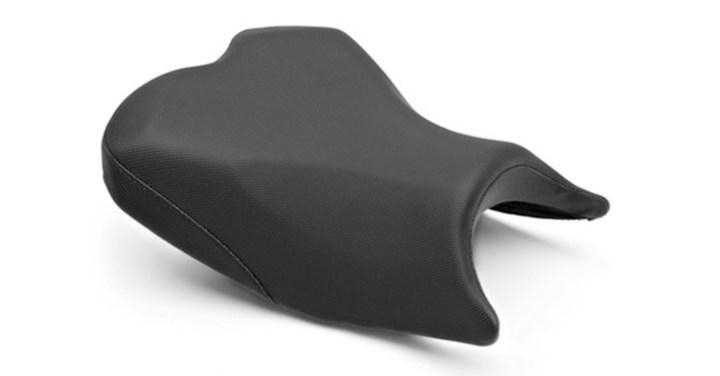
Made to tailor fit and complement the Ninja e-1 and Z e-1 motorcycle, this seat enhances riding comfort for taller riders
- The ERGO-FIT extended reach seat is 30mm taller than stock and comes fully assembled
- Utilises factory seat base and components for a factory fit
- PVC foam with vinyl cover